The Price Before the Bid
On 15 June 2022 New York deleted the rules that governed its auction houses. A look at what is settled before a lot comes up, and at the 72.9 percent of evening sale volume that is now guaranteed in advance.
Date
Category
Writer

On 15 June 2022 the City of New York deleted the rules that had governed its auction houses for thirty years.
Gone: the requirement that an auctioneer hold a licence. Gone: the requirement to disclose when the house has a financial stake in a lot. Gone: the bar on publishing an estimate below the reserve. Gone: the rule that a reserve may not exceed the low estimate. Gone: the requirement to state whether a lot carries a reserve at all. And gone: the restriction that limited the auctioneer's own fictitious bids to the range below the reserve.
Almost nothing was written about it. The salerooms did not change. The catalogues look the same. But the machinery that decides what a painting costs moved a little further out of view, and this essay is an attempt to describe that machinery while the evidence is still on the public record.

From The Microcosm of London. The room has barely changed. What happens before people enter it has changed completely. Commons
Four things are settled before the lot comes up
*The estimate* is printed. It is the only number the public sees, and it is a marketing instrument as much as a valuation.
*The reserve* is not printed. It is the confidential minimum at which the lot will sell. Sotheby's still states that the reserve is generally set at a percentage of the low estimate and will not exceed it. Until June 2022 that was law in New York City. It is now house policy.
*Chandelier bidding* is the practice of the auctioneer opening and advancing the bidding on the seller's behalf against nobody. Sotheby's own conditions of sale describe it plainly:
The auctioneer may open the bidding on any lot by placing a bid on behalf of the seller. The auctioneer may further bid on behalf of the seller, up to the amount of the reserve, by placing responsive or consecutive bids for a lot.
The movement you see in the room, in the early part of a lot, may be entirely manufactured. That is disclosed, legal and normal.
*The guarantee* is the one that actually decides the price. A minimum is promised to the seller before the sale. If the house funds it, the house is exposed. More often a third party funds it, in exchange for a fee, and commits to buy at an agreed level if nobody bids higher. That commitment is called an irrevocable bid.
House | Symbol | Meaning |
|---|---|---|
Christie's | ° | Christie's has provided a minimum price guarantee and has a direct financial interest |
Christie's | °◆ | The same, financed in whole or part through a third party |
Christie's | ∆ | Christie's owns the lot in whole or part |
Sotheby's | ○ | Guaranteed property |
Sotheby's | ⋑ | Irrevocable bid |
Sotheby's | □ | No reserve |
From Christie's financial information page and Sotheby's symbol key.
Read Sotheby's description of what happens when the irrevocable bidder wins:
If the irrevocable bidder is the successful bidder, any contingent fee, fixed fee or both may be netted against the irrevocable bidder's obligation to pay the full purchase price for the lot.
The guarantor who ends up owning the picture buys it at a different price from the one on the ticket. The hammer price is public. The price that party actually paid is not.
How much of the market this now is
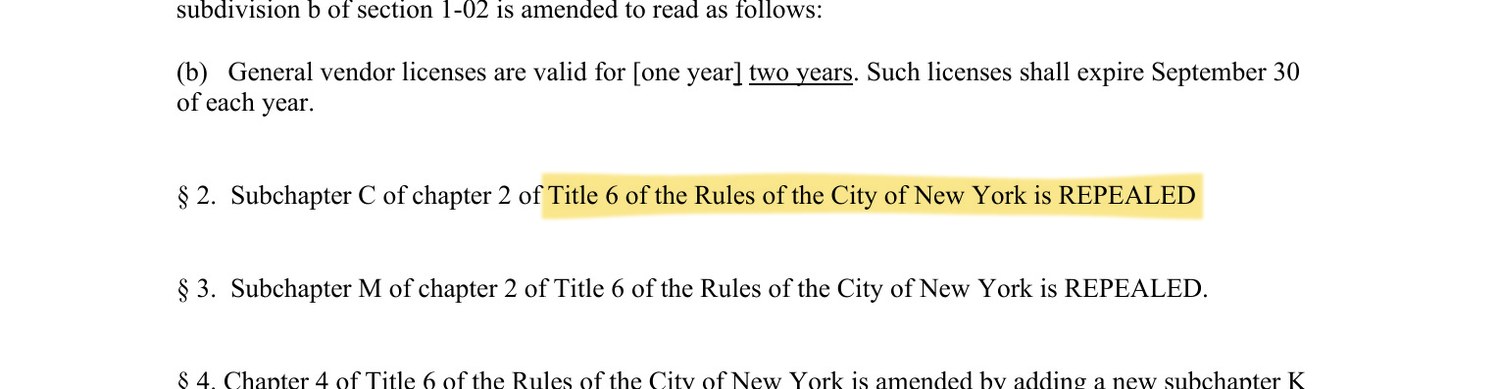
The repeal itself: Subchapter M of chapter 2 of Title 6 of the Rules of the City of New York is REPEALED. NYC Rules
Artsy on how the auction market is structured.
ArtTactic's July 2025 analysis found that *72.9 percent of evening sale volume was guaranteed* in the first half of 2025, the highest share since the analysis began in 2016: more than 2,350 guaranteed lots, ten billion dollars of value. The top twenty five artists accounted for 72 percent of the guaranteed total.
One sale makes it concrete. Christie's 21st Century Evening Sale, 15 May 2025: forty three lots offered, thirty six sold, $96.5m with fees. Six house guarantees and eighteen third-party guarantees, so twenty four of forty three lots. The third-party-guaranteed lots alone represented 75 percent of the presale low estimate, $61.6m of $82m.
Three quarters of the money in that room had been committed before anyone sat down.

Rijksmuseum RP-P-2015-26-458, CC0. The saleroom as a theatre of signals: the picture is barely looked at. Commons
The other market, where the prices are invented rather than discovered
Auction is the secondary market. The primary market is a gallery selling an artist's work for the first time, and it works on an entirely different logic: the price is announced, not found.
Two things make it strange.
First, *primary prices never publicly go down*. A dealer at Xippas put it exactly:
Lowering prices would demonstrate that we have lost confidence in the work.
A price is a statement about the artist's future, so reducing it is an admission. The market therefore has a ratchet built into it, and an artist whose market softens is more likely to have their work quietly withdrawn than repriced.
Second, *the gallery chooses the buyer*. The best-documented case is also the founding one.
Work | Year | Price |
|---|---|---|
Flag | 1954 | $1,000 |
Target with Four Faces | 1955 | $630 |
Green Target | 1955 | on the invoice |
White Numbers | 1957 | on the invoice |
Leo Castelli's invoice to the Museum of Modern Art, dated 17 February 1958, totalling $2,835 after a ten percent discount. From the Leo Castelli Gallery records, Archives of American Art.
Jasper Johns's first solo show opened in January 1958. Alfred Barr bought for MoMA. Dorothy Miller, an assistant curator, bought Gray Numbers. James Thrall Soby, a trustee, bought White Target. William Lieberman, curator of drawings, bought a flag drawing. Philip Johnson, trustee and architect, bought Flag personally, with the understanding that it would go to the museum later.
More than half the works in that show went to MoMA, to MoMA staff, or to their affiliates.
Castelli was not maximising revenue on those four canvases. He was buying the only thing that reliably makes an artist expensive later, which is institutional placement, and he was paying for it with discount.
What the economics actually says about the name
The intuition is that a famous name adds a premium to an otherwise equivalent object. The literature is more interesting than that.
Sherwin Rosen's "The Economics of Superstars" (American Economic Review, 1981) argues that tiny differences in talent get amplified into enormous differences in reward, because a seller can serve a large market at low marginal cost. On that account the price gap has a quality gap underneath it.
Moshe Adler's reply, "Stardom and Talent" (American Economic Review, 1985), proposes a different mechanism: stardom arises from consumption capital and the cost of acquiring knowledge. Knowing about an artist makes it cheaper to discuss that artist, which makes more people want to know about them. On Adler's account *stars can emerge among equally talented artists purely by coordination*.
Adler describes the art market better, and it is worth saying why that is uncomfortable rather than cynical. If Adler is right, then the market is not failing to track quality. It was never a quality-tracking instrument in the first place. It is a coordination device, and it works correctly by converging.
A related empirical finding, from Susanne Schönfeld and Andreas Reinstaller in the Journal of Cultural Economics (2007), goes the other way from what you would expect: artist reputation correlates positively with primary-market price, and *gallery reputation correlates negatively*.
And for anyone who thinks of this as an asset class: Luc Renneboog and Christophe Spaenjers analysed more than a million auction transactions from 1957 to 2007 in Management Science (2013) and found art appreciating at *3.97 percent per year in real terms*. Their own summary is that this is a performance similar to corporate bonds, at much higher risk.
Two moments where the machinery became visible
*15 September 2008. Damien Hirst bypassed his galleries entirely and consigned 223 works directly to Sotheby's, for a two-day single-artist sale titled Beautiful Inside My Head Forever*. It made £70.5m on the first day and £41m on the second, about £111m in total, ten times Sotheby's previous single-artist record.
Lehman Brothers filed for bankruptcy on day one.
The sale is usually told as a story about hubris and timing. The more interesting fact is structural: an artist demonstrated that the gallery's price-setting function could simply be skipped.
*5 October 2018. Girl with Balloon sold at Sotheby's London for £1,042,000 and shredded itself in the frame as the gavel fell. The buyer confirmed on 11 October that she would proceed. The work was renamed Love Is in the Bin*.
On 14 October 2021, in the same saleroom, against an estimate of £4m to £6m, it made *£18,582,000*.
Banksy's own film of the shredder.
Nothing was added to the object. Something was removed from it. The value multiplied by roughly eighteen because an event became part of the work, which is to say that what was being priced was never the canvas.
The Korean numbers, which are smaller and clearer

The Korean total for 2023, in the report's own table: ₩692,832 million. 예술경영지원센터
The Korean market is small enough that the whole of it can be stated.
Year | Figure | Note |
|---|---|---|
2023 total market | ₩692.8bn | against ₩806.6bn in 2022 |
galleries | ₩416.6bn | |
auction | ₩157.2bn | down 33.0 percent |
art fairs | ₩295.8bn | |
2024 total market | about ₩615.1bn | 43,872 works traded |
2024 auction hammer total | about ₩115.1bn | lowest in five years, sell-through 46.4 percent |
Korea Arts Management Service, 2024 Art Market Survey (2023 basis), and k-artmarket.kr; auction totals from the Korea Art Appraisal Association's 2024 year-end analysis.
Two houses, Seoul Auction and K Auction, account for roughly eighty percent of Korean auction turnover, at ₩48.1bn and ₩43.6bn respectively in 2024.
The record for a Korean artwork is Kim Whanki's Universe 05-IV-71 #200, a 254 by 254 centimetre diptych from 1971, sold at Christie's Hong Kong on 23 November 2019. The hammer was HK$88,000,000, about ₩13.2bn, which is the figure Korean press headlines. With premium it was about ₩15.35bn. It had been in a private collection for forty years and had never been on the market.
Note the buyer's premium at Seoul Auction's online sales: eighteen percent plus VAT, flat across every band, so roughly 19.8 percent over hammer. A hammer of ₩10,000,000 costs ₩11,980,000. Christie's and Sotheby's both now charge 28 percent up to two million dollars.
So who decides
Nobody, is the honest answer, and that is worse than a conspiracy.
The estimate is set by a specialist who wants the consignment. The reserve is negotiated with a seller who has alternatives. The guarantee is priced by a third party making a risk judgement about a resale in five years. The primary price is announced by a dealer who cannot lower it. The institutional placement that makes the later price possible was arranged, at a discount, by someone who was not trying to maximise revenue on that transaction.
Each of those people is making a defensible local decision. The number that comes out the other end is not a measurement of anything. It is the output of a chain in which the last link, the bidding, is the part you are allowed to watch.
Which is why the 2022 deregulation matters more than its coverage suggested. The rules that were removed were not rules about price. They were rules about visibility.
Sources
The Art Newspaper, "New York City removes rules governing auction houses", 4 May 2022
Christie's, "Financial information"
Sotheby's, "Guide for Buyers, Symbol Key"
ArtTactic, Auction Guarantee Analysis, July 2025
ARTnews on the Leo Castelli archive and the 1958 Johns show
Sherwin Rosen, "The Economics of Superstars", American Economic Review 71(5), 1981
Moshe Adler, "Stardom and Talent", American Economic Review 75(1), 1985
Susanne Schönfeld and Andreas Reinstaller, "The effects of gallery and artist reputation on prices in the primary market for art," Journal of Cultural Economics 31(2), 2007
Luc Renneboog and Christophe Spaenjers, "Buying Beauty: On Prices and Returns in the Art Market," Management Science 59(1), 2013
Korea Arts Management Service, art market statistics
A Korean version of this research, with the domestic market figures laid out in full, is on my Naver blog at blog.naver.com/veinism.
Latest Articles.
© Moc Mallen Studio
Thoughts, ideas, and perspectives on design, simplicity, and creative process.


